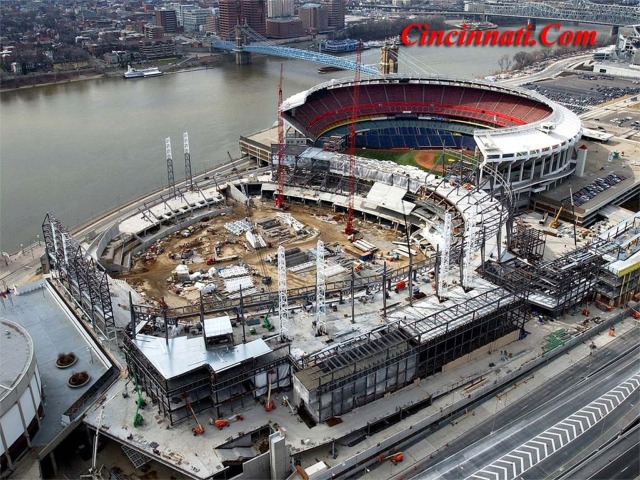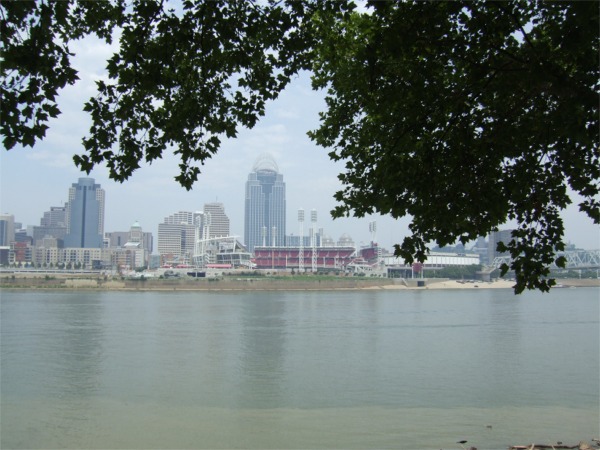
Baseball has been played along the banks of the Ohio River for over half a century, first at Riverfront Stadium beginning in 1970 and, since 2003, at Great American Ball Park. Home to the Cincinnati Reds, the construction of this modern ballpark revitalized the riverfront and became a centerpiece of downtown Cincinnati. Before Great American Ball Park was built, the area was occupied by the multi-purpose Riverfront Stadium and expansive parking lots. Riverfront Stadium, a typical circular venue of its era, housed both the Reds and the Cincinnati Bengals (NFL). By the 1990s, however, professional teams sought new, single-use stadiums with closer seating, luxury suites, and fan-friendly amenities.
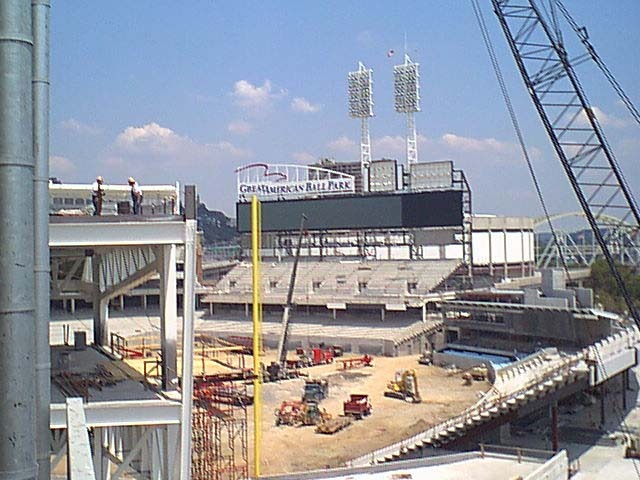
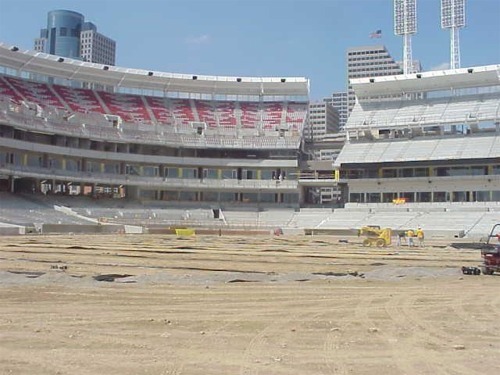
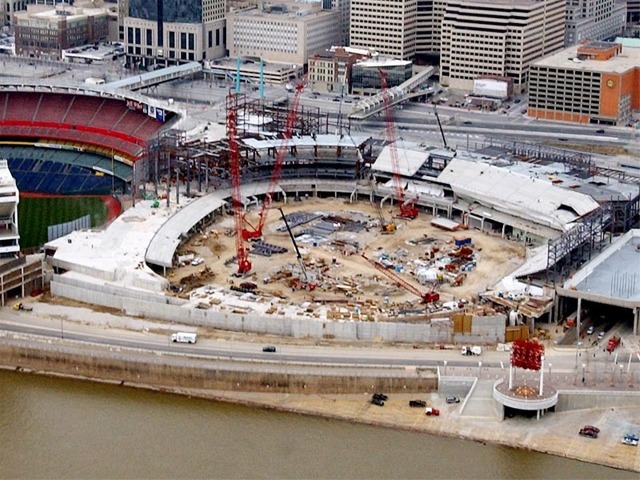
In 1996, Hamilton County voters approved a bond to increase sales taxes to fund new stadiums for both the Reds and the Bengals. Two sites were considered for the Reds’ new ballpark: Broadway Commons and a wedge-shaped plot of land between Riverfront Stadium and U.S. Bank Arena. Reds officials favored the wedge site due to its lower cost; Hamilton County already owned the land, whereas Broadway Commons would require additional acquisition expenses. In November 1998, the decision was finalized when voters approved the riverfront location. After finalizing a lease agreement, construction officially began on October 4, 2000.
Building Great American Ball Park required partial demolition of Riverfront Stadium. Approximately 14,000 seats were removed from the outfield section of Riverfront, allowing fans to witness the new ballpark’s construction over the course of two seasons from beyond the outfield fence. Great American Insurance purchased the naming rights to the new stadium for $75 million over 30 years, giving it the name Great American Ball Park.
| MEMORABLE MOMENTS AT GREAT AMERICAN BALL PARK |
|
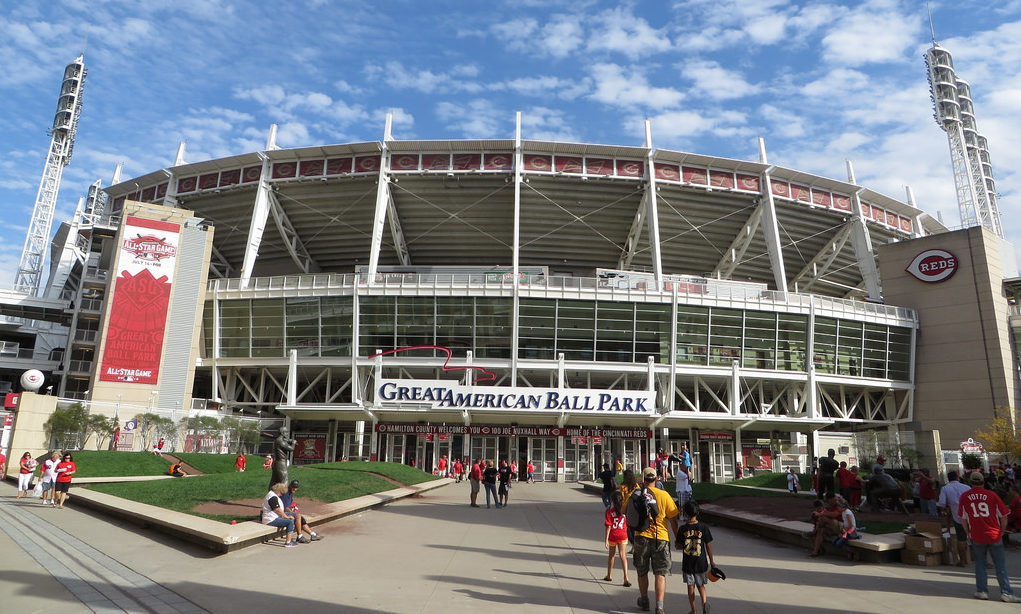
A harmonious blend of modern design and classic ballpark features, Great American Ball Park provides an ideal setting for America’s pastime. Along the perimeter of the ballpark on Second Street, fans are greeted by a three-story brick and cast limestone building adorned with the phrase “Rounding third and heading for home,” the iconic sign-off of former Reds broadcaster Joe Nuxhall. Banners celebrating key moments in Reds history line the area. At the corner of Second and Main Streets is Crosley Terrace, the ballpark’s home plate entrance, which most fans pass through. The terrace spans an acre of concrete landscaped with grass, trees, and statues of Joe Nuxhall, Ernie Lombardi, Ted Kluszewski, Joe Morgan, Johnny Bench, Pete Rose, Frank Robinson and Marty Brennaman. The grass is sloped to mimic Crosley Field’s famous outfield incline, while special lighting highlights the statues, stone benches, and a 60-foot sculpture that celebrates the romance of baseball. A 16-foot, 8-inch custom street clock, gifted by former Reds player Joey Votto was installed prior to the 2026 season. Adjacent to the ballpark along Main Street is the Reds Hall of Fame Museum and team store. Near the museum lies a rose garden commemorating Pete Rose’s record-breaking 4,192nd hit, which took place at Riverfront Stadium.
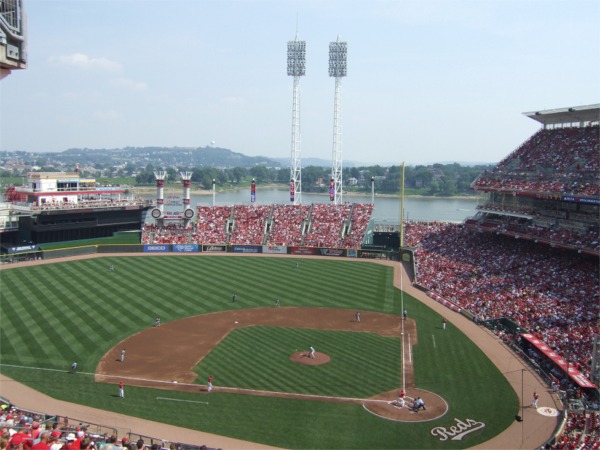
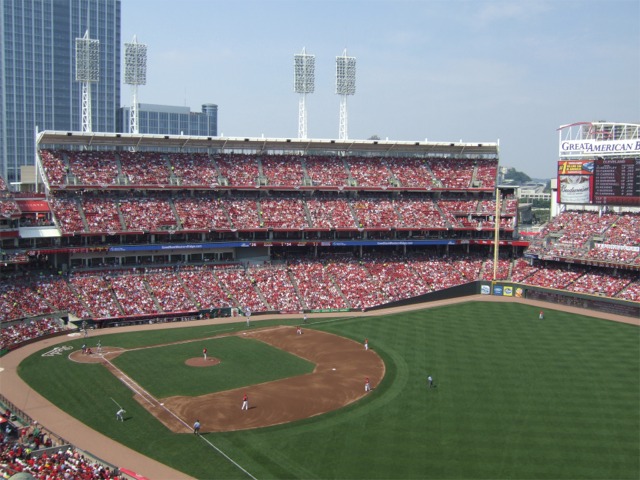
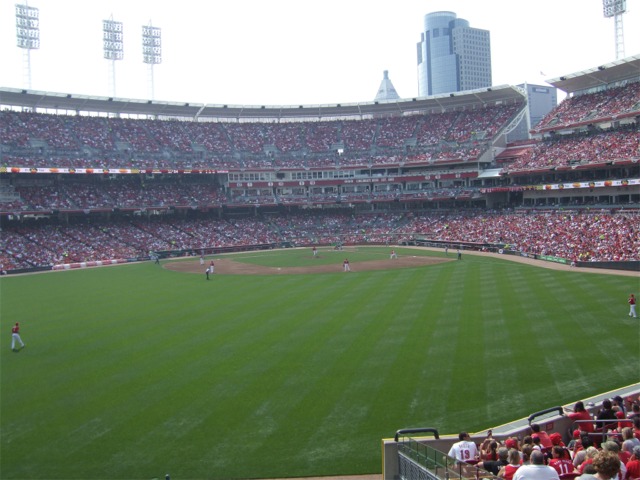
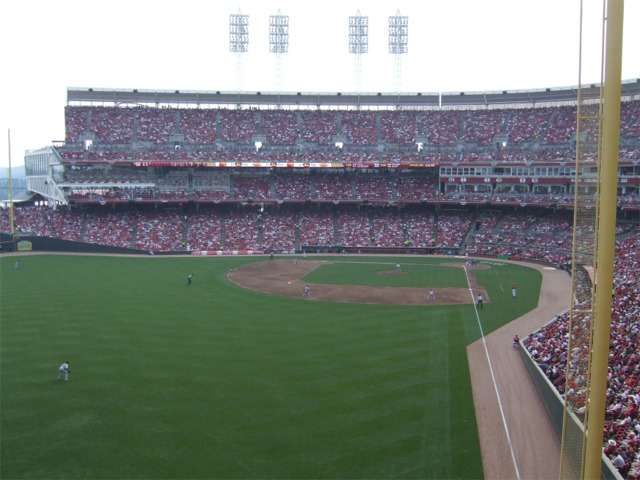
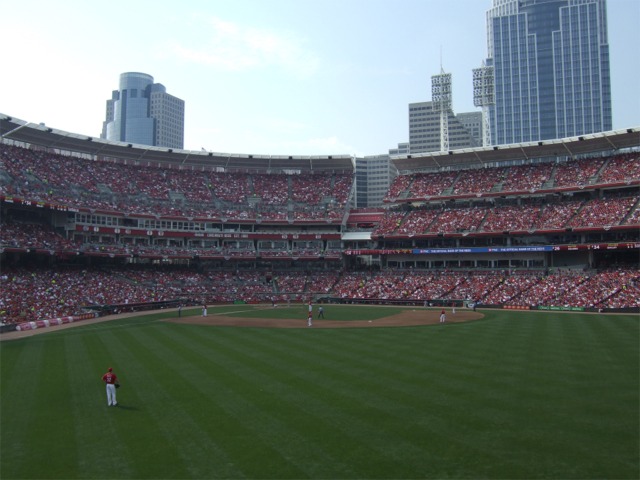
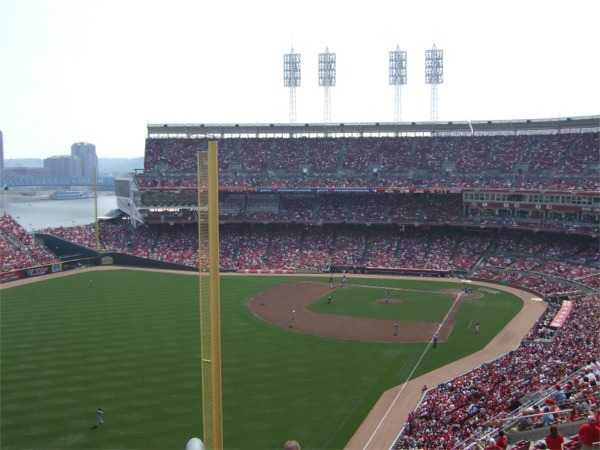
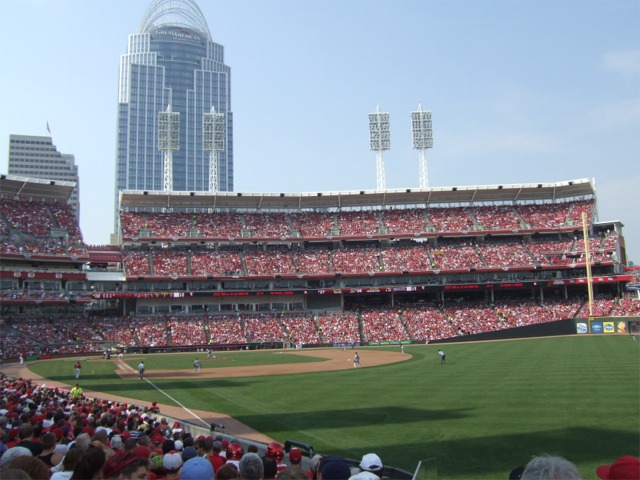
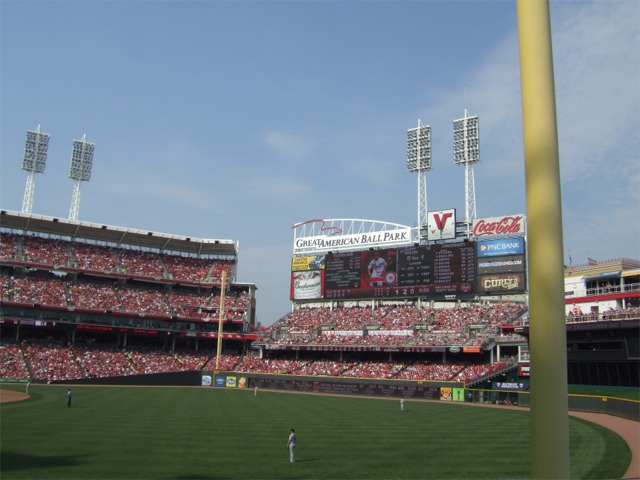
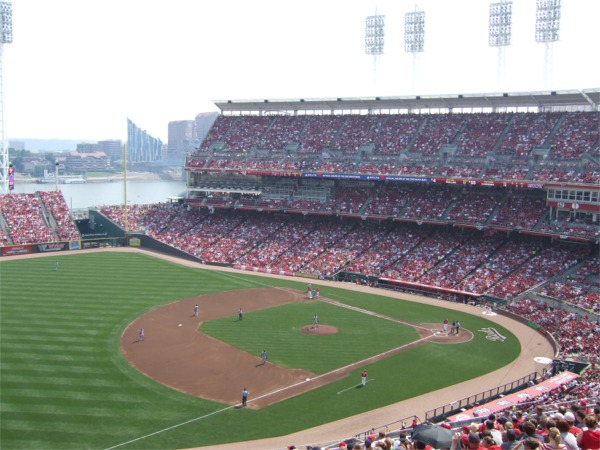
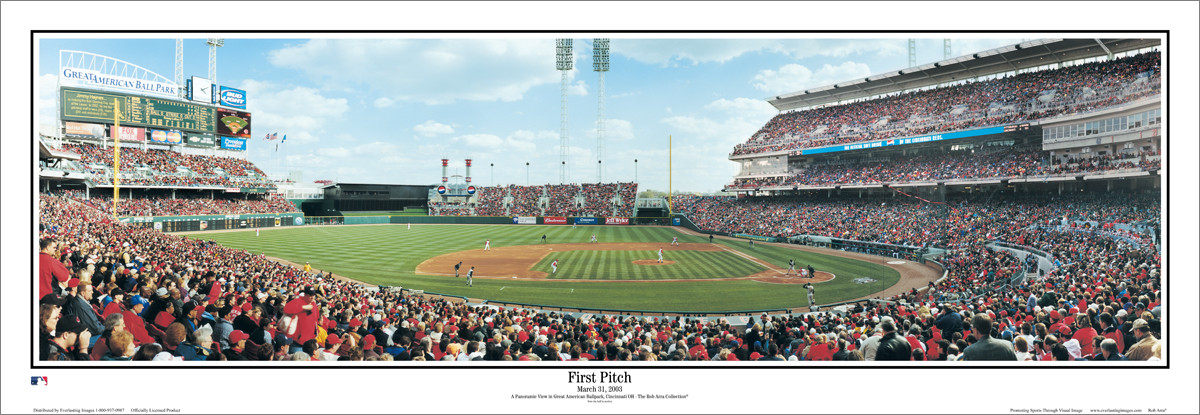
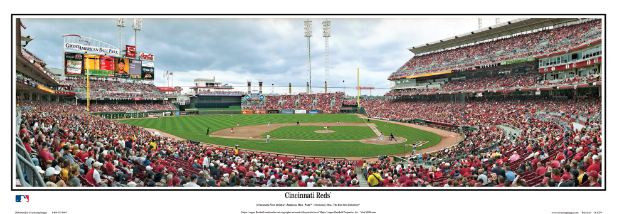
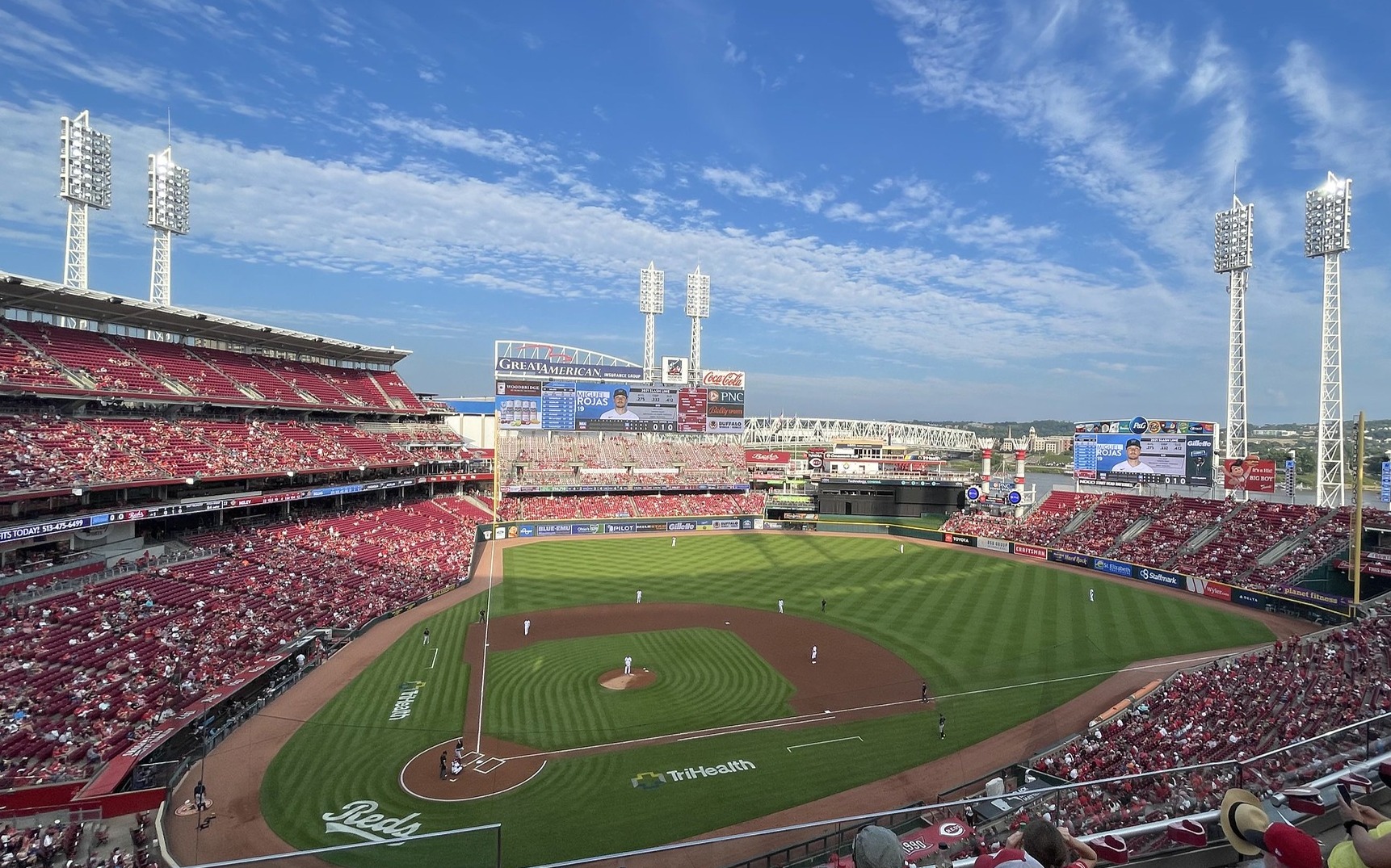
Once inside the ballpark, fans are treated to stunning views of the field and the surrounding area. Great American Ball Park seats approximately 45,814 fans across three levels. The lower grandstand stretches from the left-field foul pole to home plate and wraps around to the right-field foul pole. The second deck houses club seats, luxury suites, and the press box, while the upper deck, split into two sections, extends from foul pole to foul pole. A notable design feature is the gap in the seating sections between home plate and third base, which allows fans in downtown Cincinnati to peer into the ballpark and positions the upper deck closer to the field than in many other stadiums. Double-decked bleachers in left field and additional seating beyond the right-field fence further enhance the intimate viewing experience, aided by minimal foul territory.
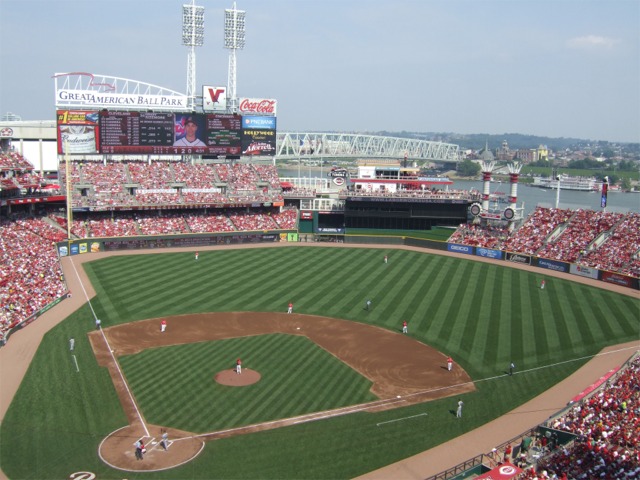
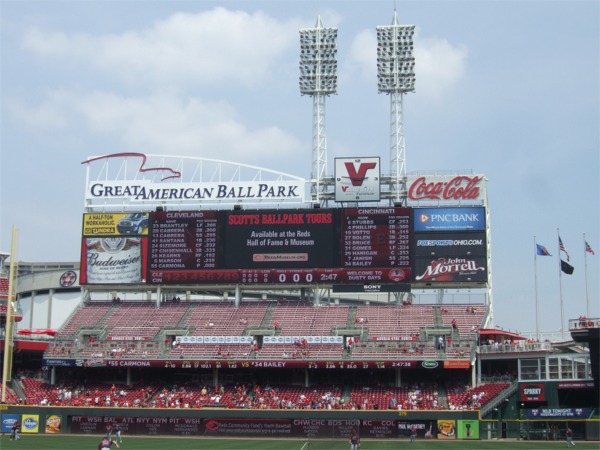
The ballpark’s iconic scoreboard towers above the left-field bleachers. Topped by a replica Longines analog clock from Crosley Field, the massive video and score display dominates the skyline. The Reds’ bullpen is located in left-center field, while the visiting team’s bullpen sits behind the outfield wall near the right-field foul pole. Great American Ball Park features several unique amenities. The Machine Room Grille, located in the left-field corner, provides a brewpub experience where fans can enjoy memorabilia from the Big Red Machine era while watching the game. Other premium options include the Championship Club, the Handlebar at the Riverfront Club, and the Diamond Club.
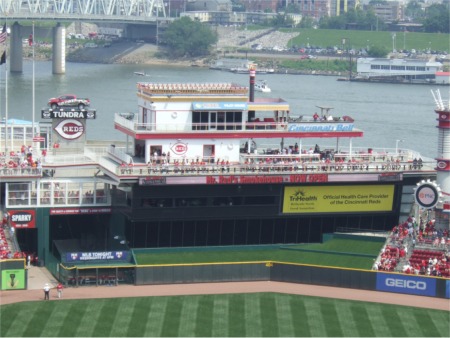
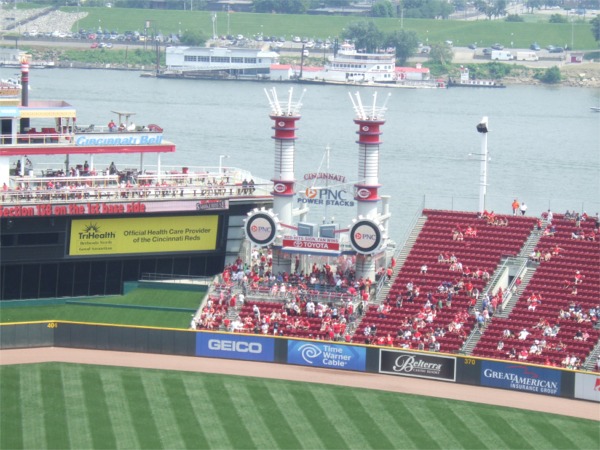
In right field, a towering 64-foot-high homerun feature adds excitement to every game. Comprised of two smokestacks, a paddle wheel, and a misting system, it springs to life with noise, fireworks, and mist whenever a Reds player hits a home run. In 2006, the Reds added the Riverboat Deck atop the batter’s eye, a two-story party area accommodating around 150 fans with spectacular views of the action.
Ahead of the 2015 All-Star Game, a 90-foot-wide by 31-foot-high LED videoboard was installed above the Sun/Moon Deck seats in right field, further enhancing the fan experience. Combining modern amenities with nods to its rich history, Great American Ball Park continues to be a cherished home for the Cincinnati Reds and a symbol of pride for the city along the Ohio River.
Great American Ball Park Pictures