Where did the oldest continuously operating professional sports franchise in North America originate? If you guessed Boston, you’re correct. If you guessed the Boston Red Sox, however, you’d be mistaken. That distinction belongs to the franchise now known as the Atlanta Braves. The team’s roots trace back to 1871, when the Boston Red Stockings became a founding member of the National Association of Professional Base Ball Players. The club played its early games at South End Grounds and adopted the “Red Stockings” nickname from Cincinnati’s pioneering professional team, which had disbanded following the 1870 season. Over the next four decades, the franchise, known at various times as the Red Stockings, Beaneaters, Doves, and Braves, called three different versions of South End Grounds home.
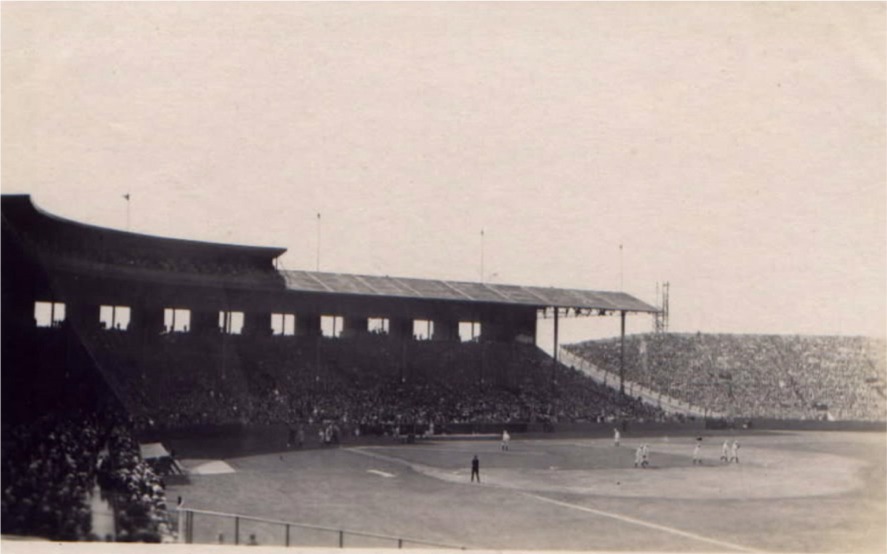
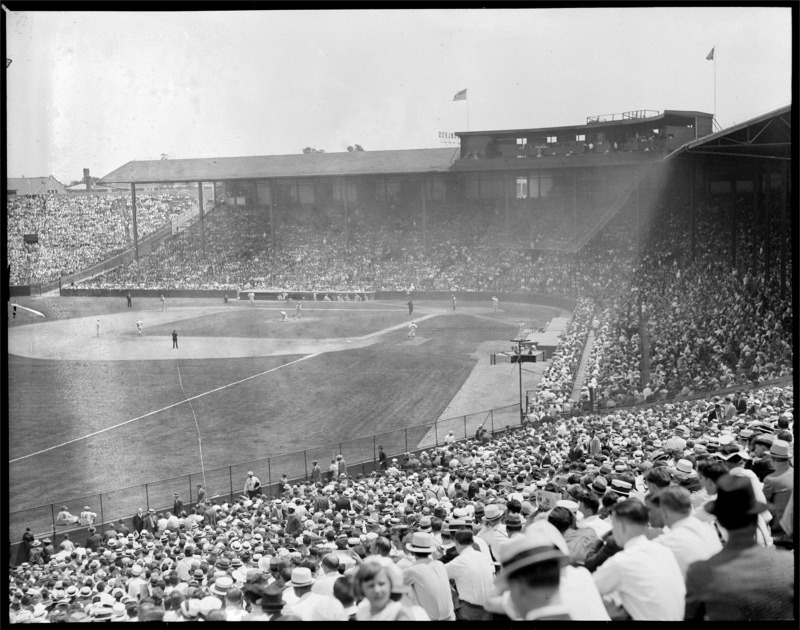
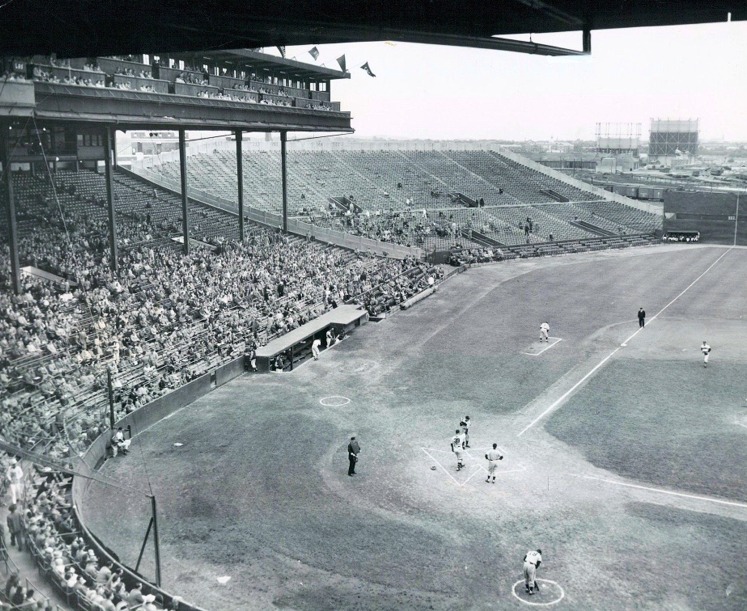
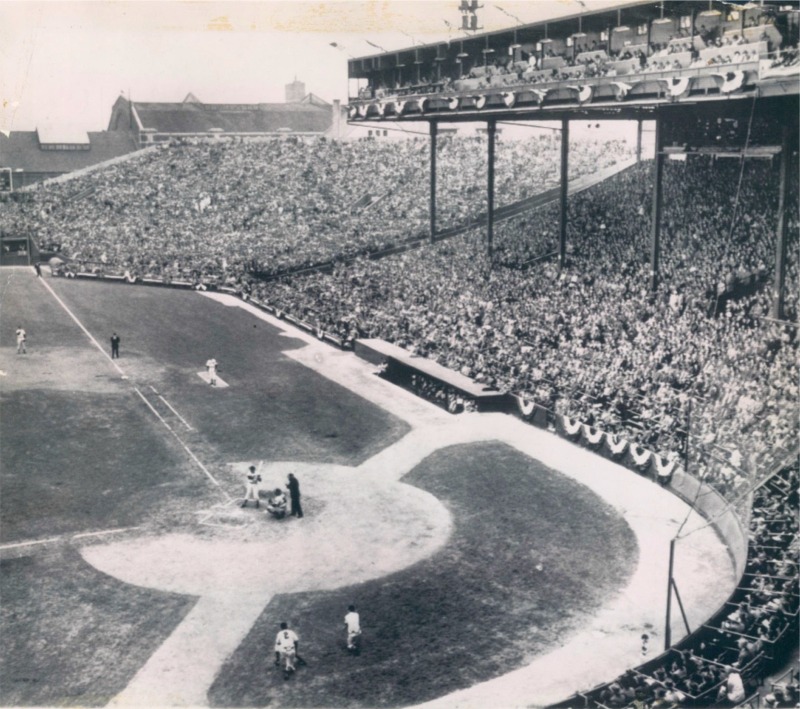
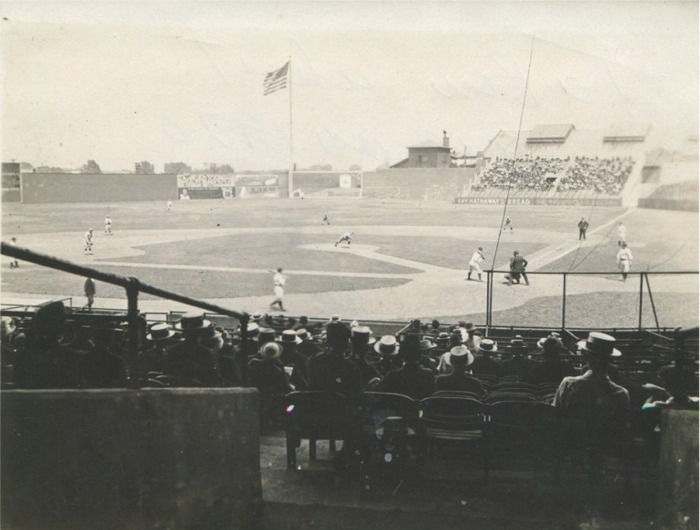
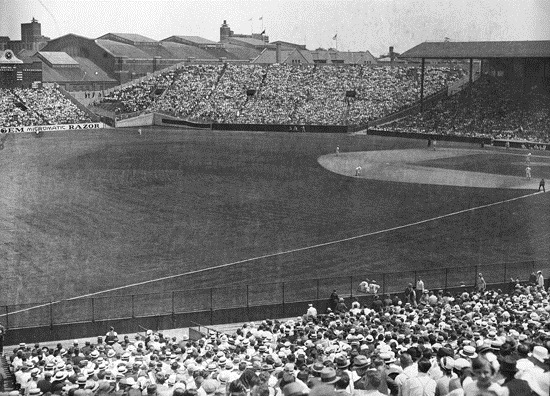
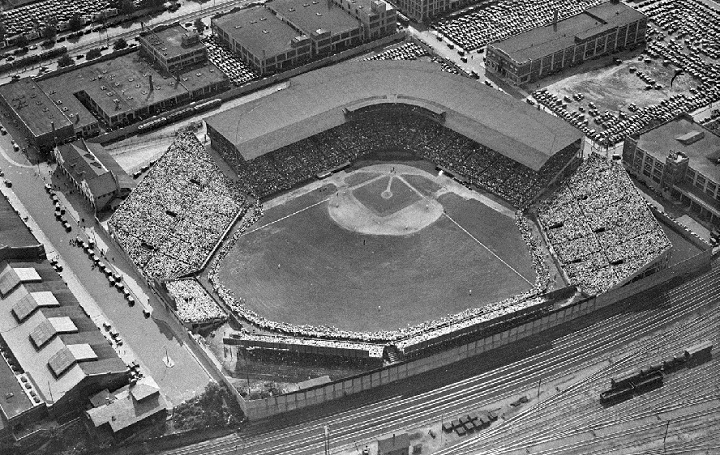
Boston became a two-team baseball city in 1901 when the Boston Red Sox joined the newly formed American League. The Red Sox played at Huntington Avenue Grounds before moving into Fenway Park in 1912. Seeking a modern home for his National League club, Braves owner James Gaffney purchased the Allston Golf Club on Commonwealth Avenue and invested $100,000 in a new ballpark. Located approximately one mile west of Fenway Park, construction began on March 20, 1915. Completed in just five months, Braves Field opened on August 18, 1915, when the Braves hosted the St. Louis Cardinals. The new stadium was revolutionary for its time, becoming the first baseball park with a seating capacity exceeding 40,000. A covered grandstand containing 18,000 seats stretched around home plate and down both foul lines, while uncovered pavilions extended toward each foul pole and accommodated another 20,000 fans. A small right-field bleacher section seated 2,000 spectators and earned the nickname “The Jury Box” after a sportswriter noticed only a dozen fans occupying it during a game in 1918. The ballpark’s main scoreboard stood above this section.
| MEMORABLE MOMENTS AT BRAVES FIELD |
|
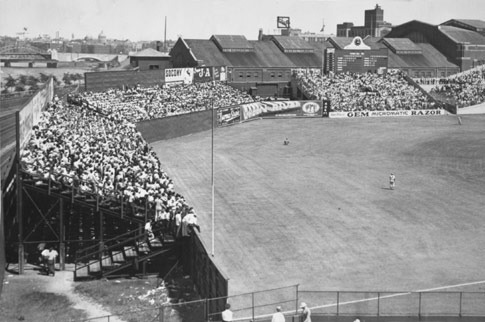
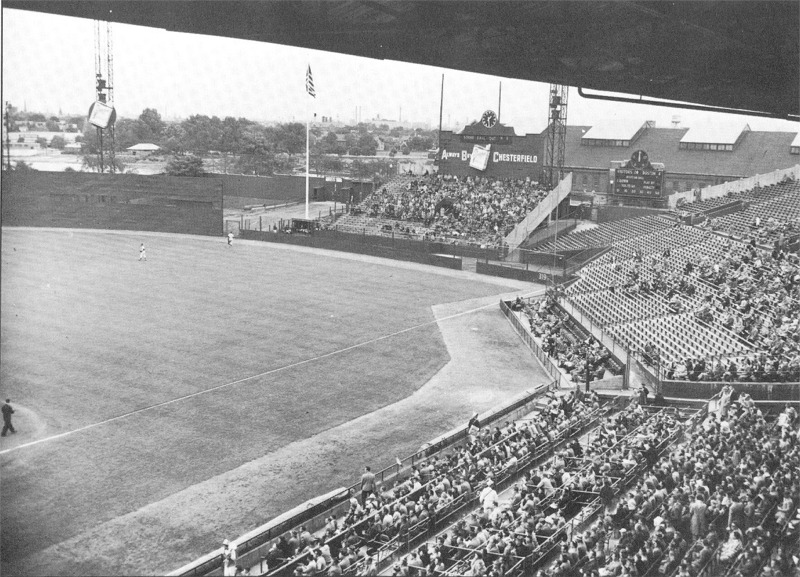
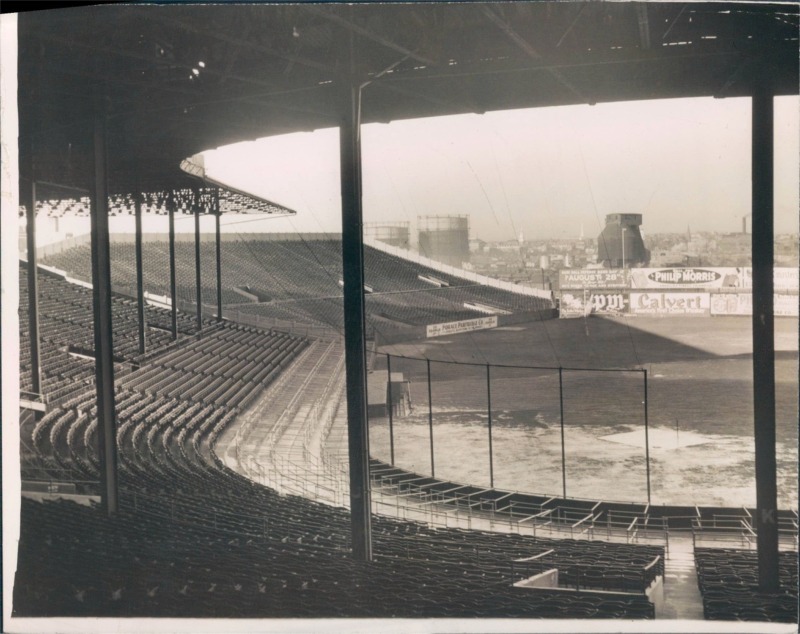
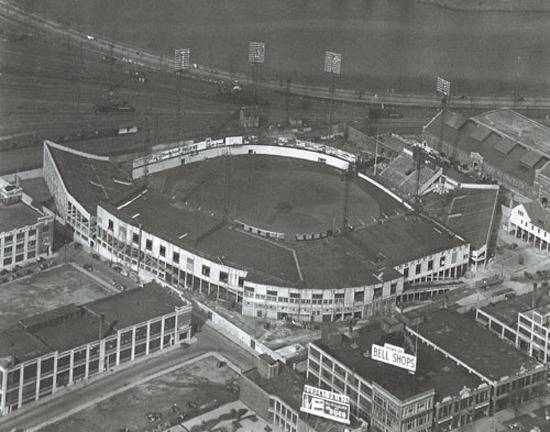
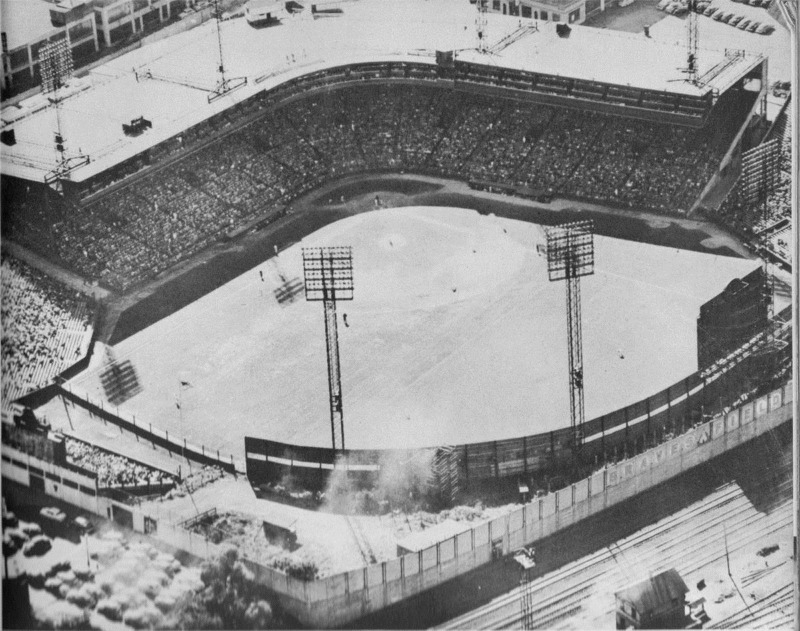
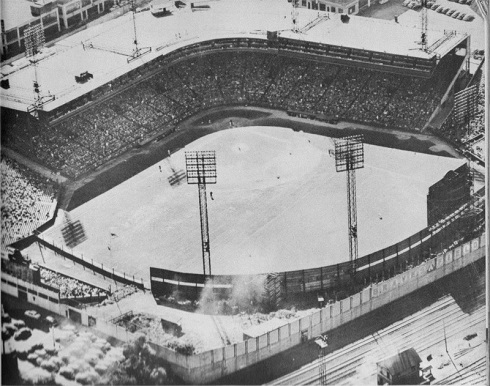
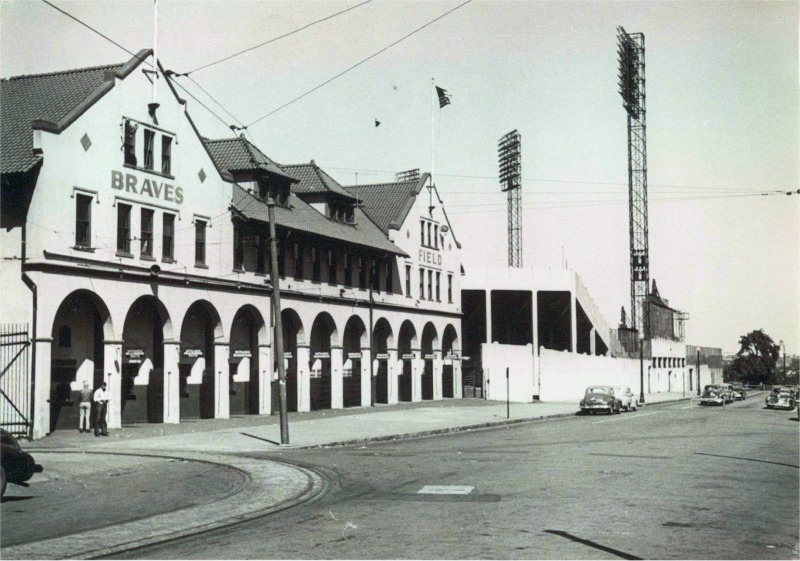
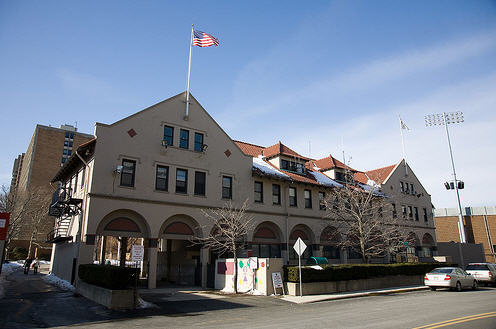
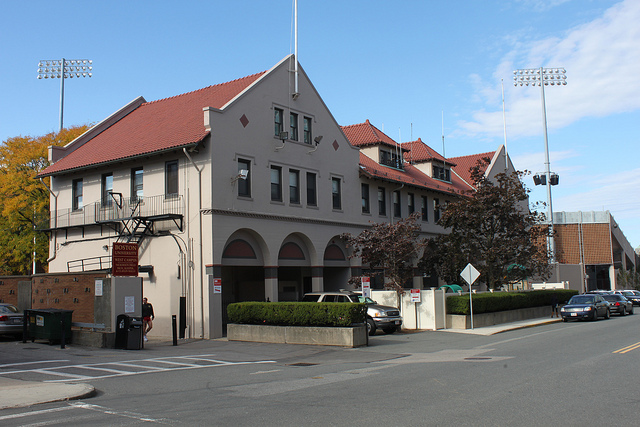
Braves Field was famous for its enormous dimensions. Originally measuring 402 feet down both foul lines and an astounding 550 feet to center field, the park was built for speed and defense rather than home runs. The spacious outfield produced numerous inside-the-park home runs and was enclosed by a 10-foot wall. Beyond the outfield ran the tracks of the Boston & Albany Railroad. One of the stadium’s most distinctive architectural features stood beyond the right-field wall: a Spanish Colonial-style building with stucco walls and a red tile roof that housed the team’s ticket offices and headquarters.
As baseball entered the live-ball era, fans increasingly preferred home runs over pitching duels and inside-the-park excitement. To accommodate changing tastes, the Braves added approximately 6,000 seats in left-center field during the 1920s, reducing the dimensions to 353 feet down the left-field line and 387 feet to center field. The changes, however, benefited opposing hitters more than the Braves, eventually prompting the team to move portions of the outfield fence back.
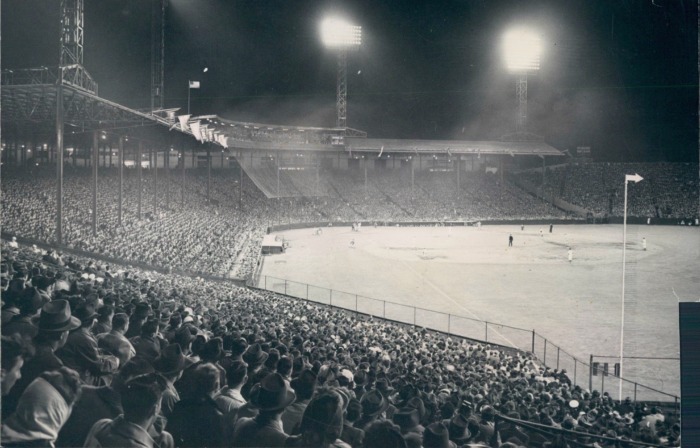
In 1936, the franchise briefly changed its nickname to the Bees, and Braves Field was renamed National League Park. The experiment lasted only a few seasons before the club reverted to the Braves name in 1941. During the 1940s, rows of fir trees were planted beyond the center-field fence to help conceal smoke from the adjacent rail yard. Before the 1946 season, the Braves invested $500,000 in renovations that included installing lights and constructing a new eight-foot outfield wall that brought the fences closer to home plate. On Opening Day, many fans left with green clothing because freshly painted seats had not fully dried. Two years later, a new 68-foot scoreboard was added to the stadium.
The postwar years brought renewed success. In 1946, the Braves drew more than one million fans for the first time in franchise history. Two years later, they captured the National League pennant and appeared in the 1948 World Series, marking the high point of the Braves Field era.
The success proved short-lived. Attendance declined sharply in the early 1950s as the team struggled both on the field and at the gate. Most Boston fans had no idea they were witnessing the end of an era when the Braves played their final game at Braves Field on September 21, 1952, a loss to the Brooklyn Dodgers. Just weeks before the start of the 1953 season, owner Lou Perini announced the franchise would relocate to Milwaukee’s County Stadium, becoming the Milwaukee Braves.
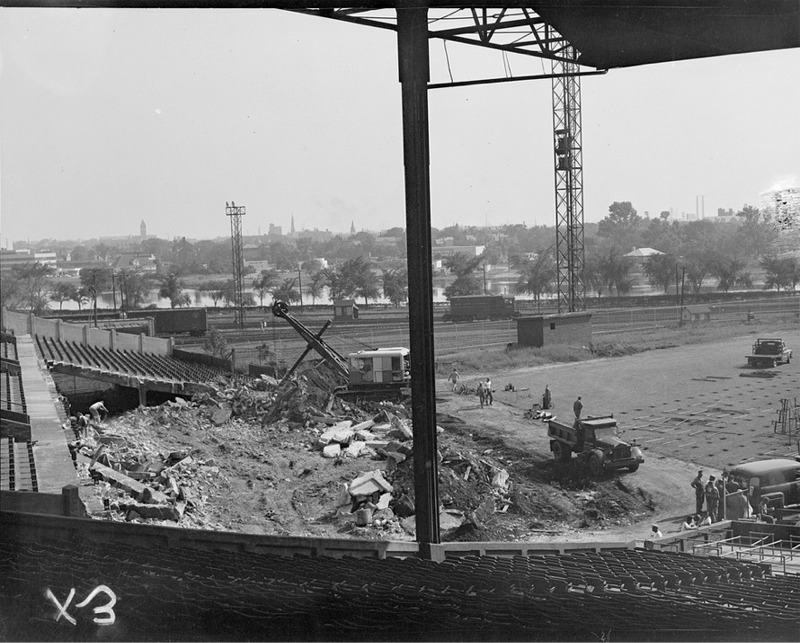
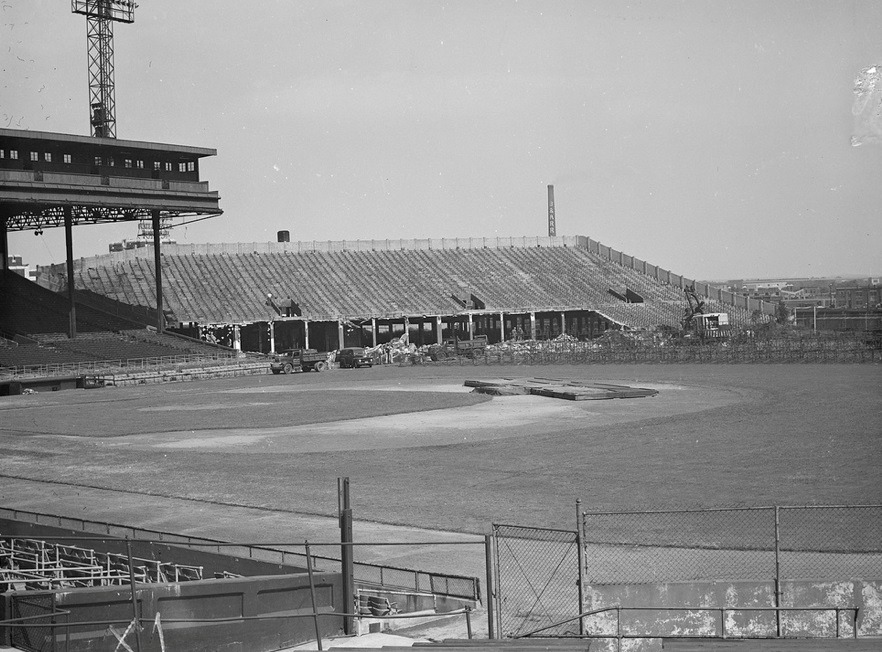
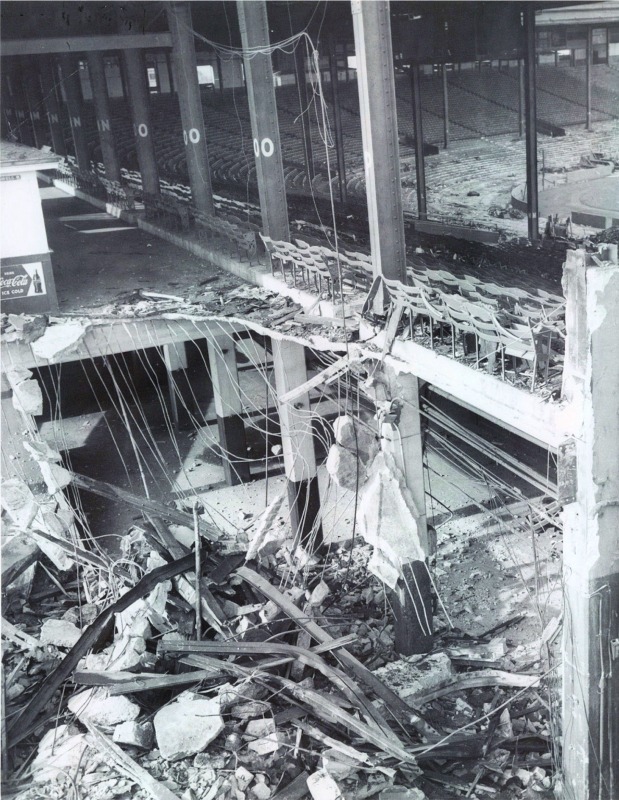
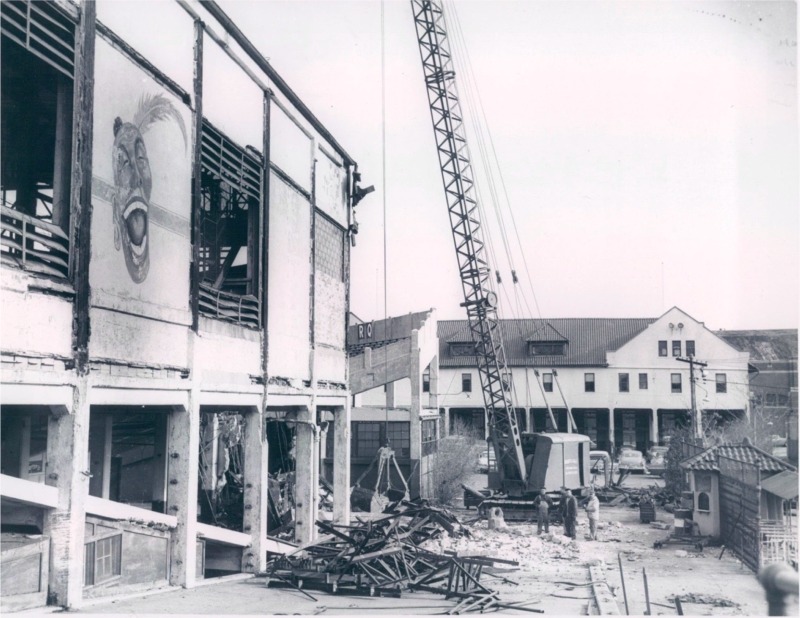
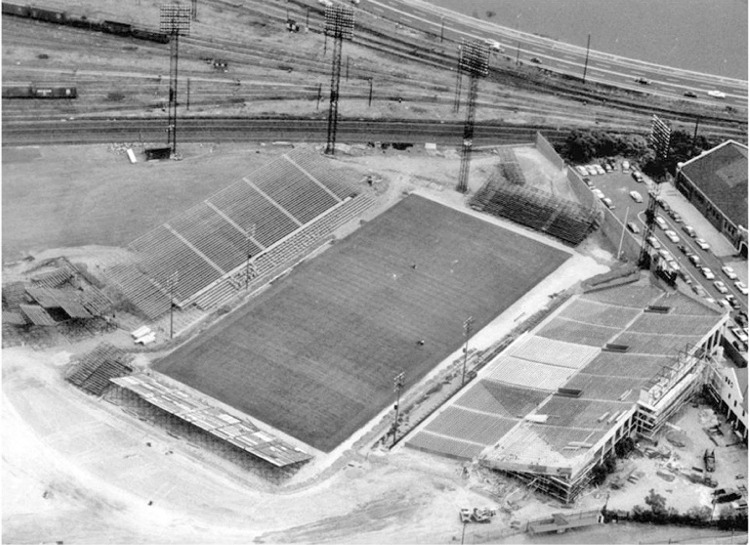
Professional baseball never returned to Braves Field, but portions of the historic stadium survive today. In 1953, Boston University purchased the property and converted it into a football facility. Most of the original ballpark was demolished, though the right-field grandstand and the former ticket and executive office building were preserved. Renamed Nickerson Field, the venue served as the home of Boston University’s football program until 1997 and continues to host the university’s soccer and lacrosse teams.
Braves Field Picture